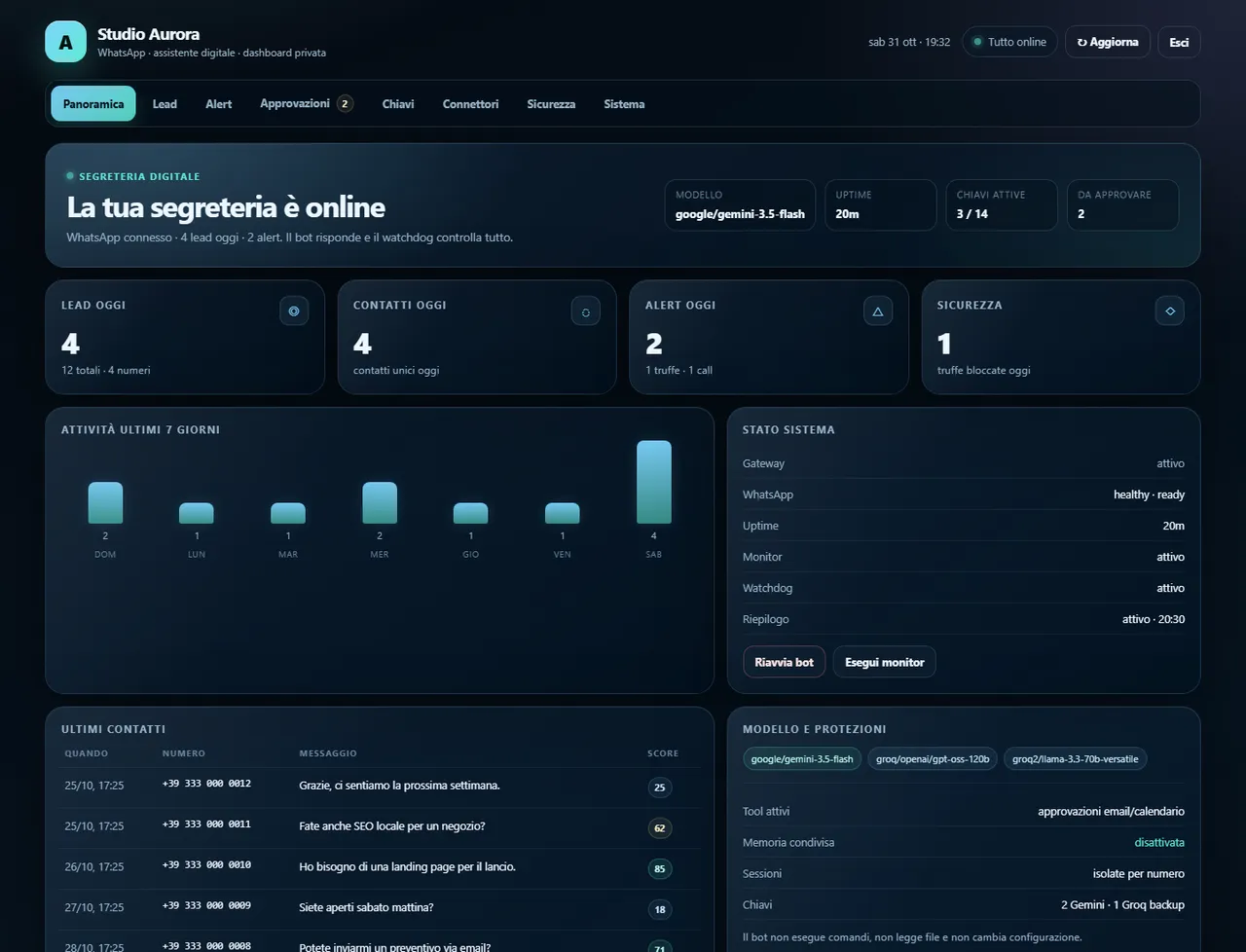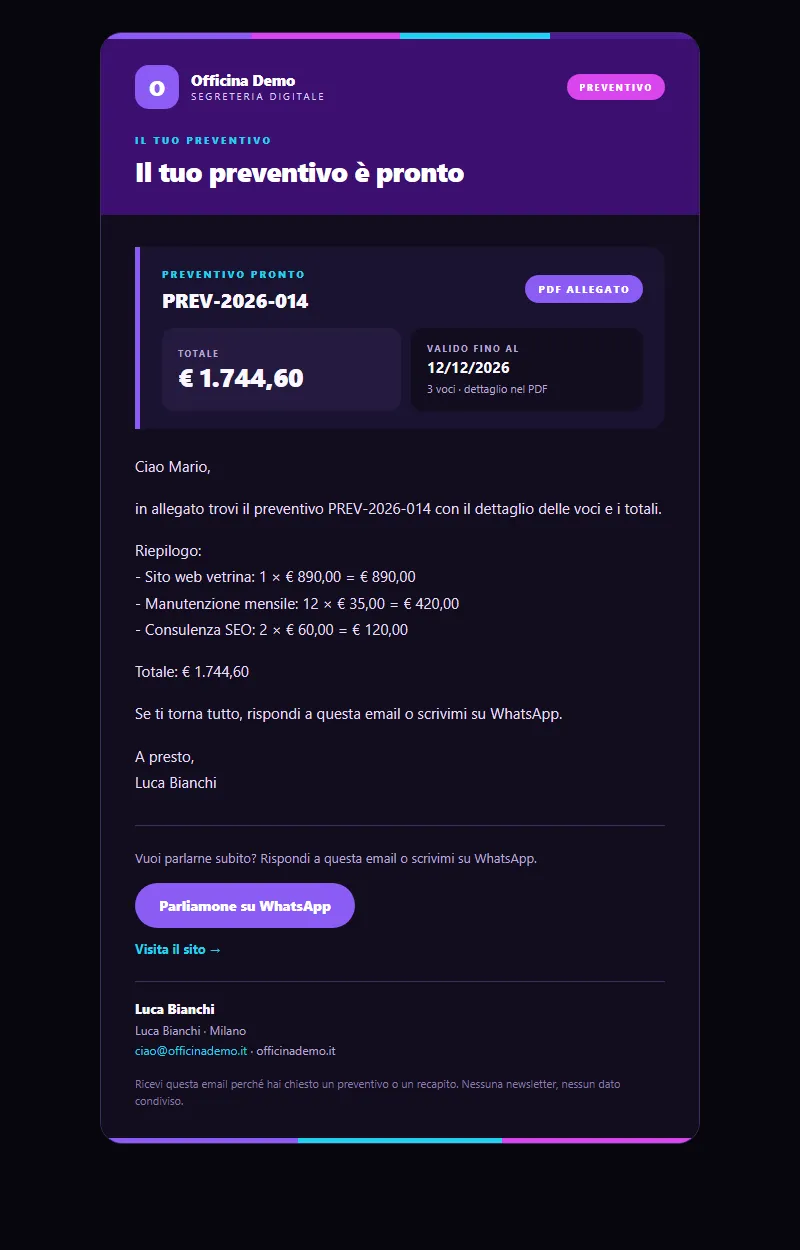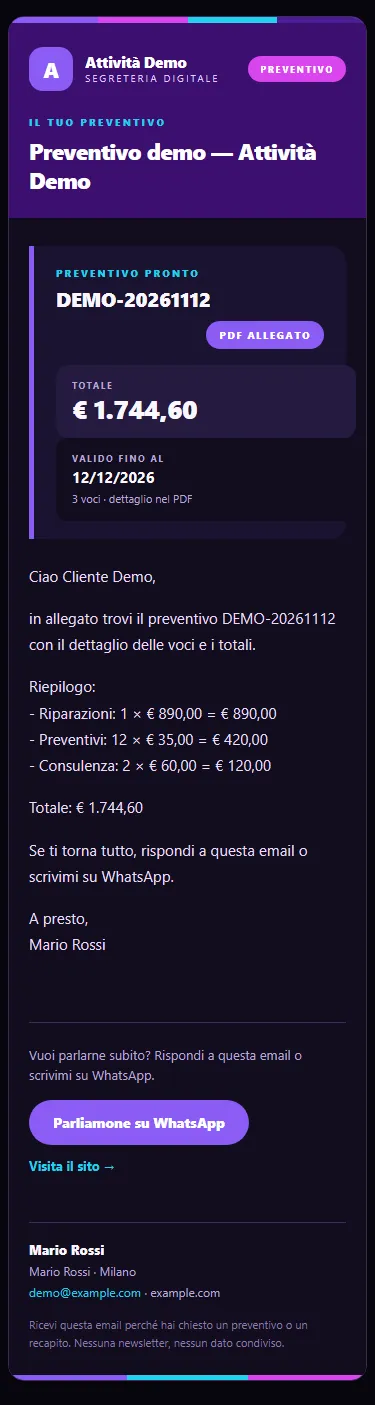
The problem
For a small business, WhatsApp is the main channel and also where messages get lost. The questions are always the same — hours, prices, availability — but they arrive at any time. A rigid chatbot makes things worse: it answers at random and the user gives up.
How I approached it
- WhatsApp Cloud API as the official channel, not fragile browser automations.
- An AI model with short instructions and a closed list of actions: book, look up an order, ask for information. If a request falls outside that list, the conversation goes to a person.
- Seven languages handled by the same flow, not seven copies of the code.
- History and state stored in Supabase, so a reply does not depend on the phone that received it.
What changed
- Seven languages in the same assistant.
- A 78.5 KB Android app: installs instantly even on modest phones.
- Requests outside its coverage reach a person, with the context already collected.
- When the model does not know, it says so instead of filling the gap.
Limits and what is missing
It needs a WhatsApp Business account and an AI key: it is not a service that turns itself on. The assistant handles repeated requests, it does not replace a person in negotiations. Data passes through WhatsApp, Supabase and the AI provider: real use must be agreed with whoever runs the business.