The problem
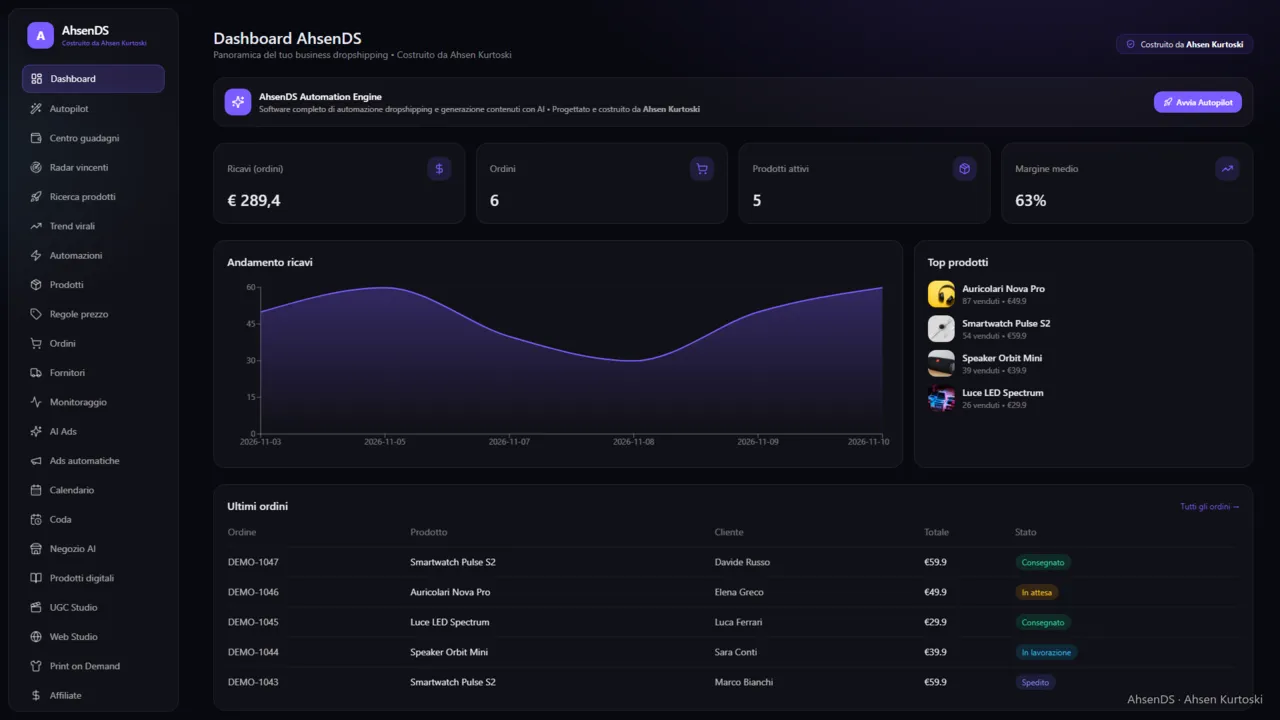
Anyone selling online loses hours copying products from CJ Dropshipping into a spreadsheet, then into a tool for product pages, then into another for videos. Off-the-shelf tools cost money and hide the steps: when something breaks, you cannot tell why. I wanted to understand that pipeline from the inside, without buying another dashboard.
How I approached it
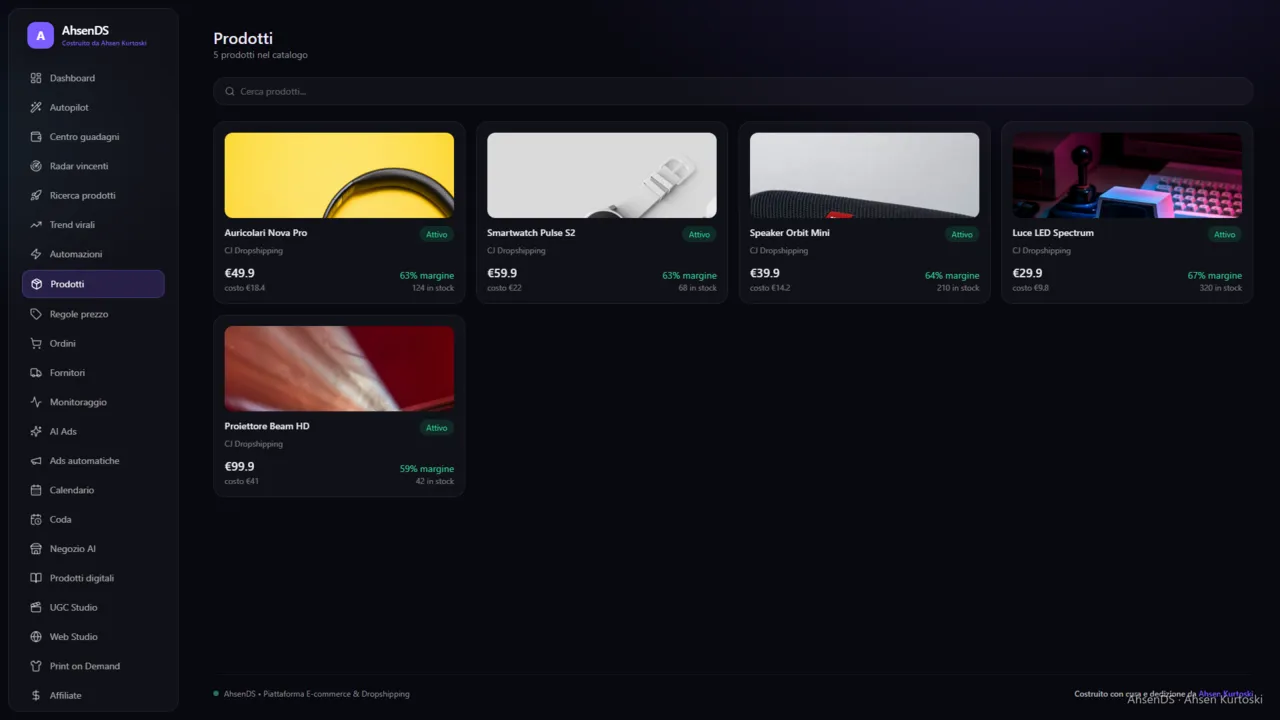
- I designed the flow before writing code: product import, scoring, product page, landing page, video, publishing. Each step can run on its own.
- Next.js 14 with the App Router and TypeScript for one codebase across server and client; Supabase for authentication, database and storage.
- Multiple interchangeable AI providers, with explicit diagnostics: if a key is missing or a model fails, the platform says so instead of inventing content.
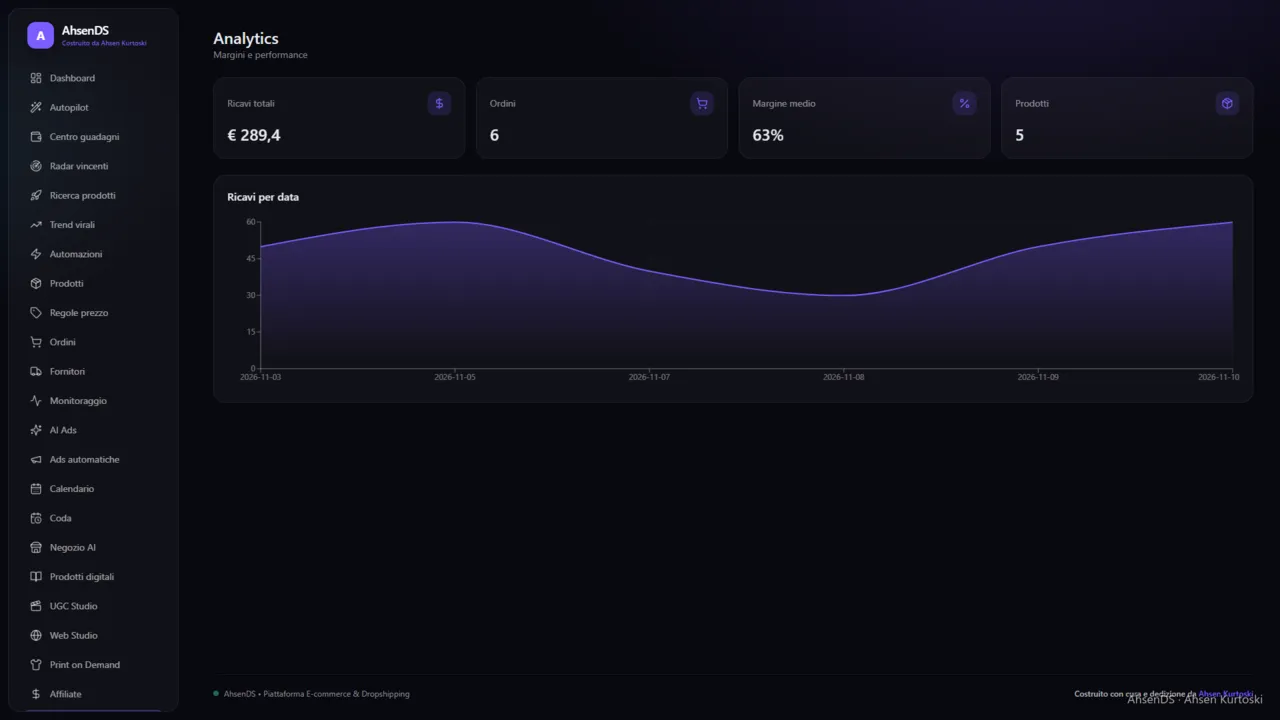
- No fake data in the screens: the numbers come from the database, even when they are empty.
What changed
- Four months of work, from the first schema to the public repository.
- MIT licence: the code can be read, run and modified.
- One application instead of four separate subscriptions.
- Real diagnostics: every configuration error has a message that says what is missing.
Limits and what is missing
It is self-hosted: using it requires a Supabase account and at least one AI key. It is not a turnkey product for a shop that does not want to configure anything, and I do not have public usage data to show yet. The repository is the right place to evaluate it.